I have been reflecting on an important question in Philippine political life: What does it mean to pursue social transformation when the old ideological categories no longer adequately describe our reality? For me, the answer cannot be found simply by declaring the Philippine Left irrelevant, nor by defending everything historically associated with the revolutionary Left. Both positions are too simplistic. The deeper challenge is to distinguish between the validity of social grievances and the validity of the political strategies used to address them. The Philippines continues to experience poverty, land inequality, precarious employment, political dynasties, corruption, oligarchic concentration of wealth and power, environmental destruction, Indigenous Peoples’ struggles, and profound inequalities between urban and rural communities. These realities did not disappear simply because particular revolutionary organizations have weakened. A movement may fail in its strategy while the social conditions that produced it remain unresolved. This is why I believe we need to move beyond the question, “Is the Philippine Left still relevant?” The more important question is: “What kind of social transformation does the Philippines need today?”
Permanent link to this article: https://waves.ca/2026/09/10/beyond-the-left-right-binary-toward-a-philippine-politics-of-sovereignty-and-social-transformation/
Permanent link to this article: https://waves.ca/2026/08/31/women-hold-half-the-world-leadership-livelihoods-and-community-transformation/
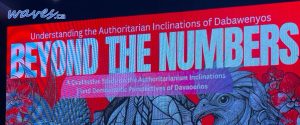
Permanent link to this article: https://waves.ca/2026/08/21/beyond-the-numbers-standing-at-the-frontlines-of-davaos-democratic-reflection/
WHEN KINSHIP CROSSES GENERATIONS: BAI MADIGAR RETURNS TO THE BAGOBO TAGABAWA COMMUNITY
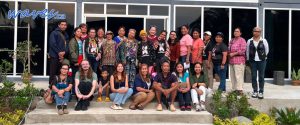
There are journeys that take us to places, and there are journeys that bring us home to relationships. For me, Bai Madigar’s return to the Bagobo Tagabawa community was the latter. Her presence reminded me that kinship is not confined by blood, age, geography, or even generations. It grows through relationships of trust, respect, hospitality, shared memory, and mutual care. As a member of the Malik Clan of the Bagobo Tagabawa community, I have come to understand that belonging carries both joy and responsibility. What one generation begins, another generation can inherit, deepen, and carry forward. Seeing Bai Madigar, together with Byron and his family, reconnect with our Indigenous relatives touched me deeply. It was more than a family gathering; it was a living expression of intergenerational solidarity. For me, this is the beauty of peacebuilding: relationships becoming bridges, memory becoming heritage, and kinship becoming a pathway toward a more just and harmonious future.
Permanent link to this article: https://waves.ca/2026/07/24/when-kinship-crosses-generations-bai-madigar-returns-to-the-bagobo-tagabawa-community/
BEYOND CORRUPTION: A NONVIOLENT LIBERATION THEOLOGY READING OF THE SONA NG SAMBAYANAN 2026
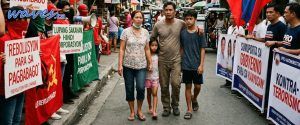
The SONA ng Sambayanan 2026 is more than a protest statement; it is a prophetic indictment of a political and economic system that continues to produce poverty, corruption, inequality, and ecological destruction. While I affirm its call for accountability, social justice, and the rejection of political dynasties, I also read it through the analytical lens of a more radical transformation, expressed within the ethical commitments of nonviolent Liberation Theology. For me, corruption is not merely the failure of individual politicians but a symptom of deeper structural realities—oligarchic capitalism, landlordism, neocolonial dependence, and the concentration of wealth and power. My commitment remains rooted in the liberating way of Jesus Christ, who confronted oppressive systems through courageous, truth-filled, and active nonviolence. Genuine transformation will not come simply by replacing political personalities but by dismantling unjust structures and building participatory institutions where justice, peace, human dignity, and the common good can flourish.
Permanent link to this article: https://waves.ca/2026/07/24/beyond-corruption-a-nonviolent-liberation-theology-reading-of-the-sona-ng-sambayanan-2026/
MALIPAYON PEACE HUB: CREATING A JUSTICE-BASED, PEOPLE-ORIENTED, AND LAND-REGENERATING SYSTEM OF HOLISTIC PROSPERITY
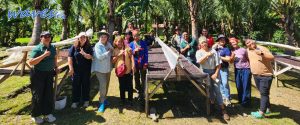
Malipayon Peace Hub is a shared vision of Dann Pantoja (Datu Pugawang) and Joji Pantoja (Bai Kasunayan) for a more just, people-centered, and regenerative future. Rooted in decades of peacebuilding, social entrepreneurship, Indigenous engagement, and community development, the Hub seeks to demonstrate that genuine prosperity is possible when human flourishing and ecological regeneration become inseparable. Inspired by transformative experiences across the Global South, Malipayon brings together peace, justice, Indigenous wisdom, ethical enterprise, regenerative agriculture, environmental stewardship, and intergenerational mentoring. It is envisioned not simply as a physical place, but as a living laboratory where communities can learn, experiment, create livelihoods, restore ecosystems, and nurture relationships grounded in dignity and mutual care. For Dann and Joji, Malipayon represents a continuing journey of hope: creating practical pathways where people, communities, and the land can flourish together—joyfully, sustainably, and peacefully.
Permanent link to this article: https://waves.ca/2026/06/22/malipayon-peace-hub-creating-a-justice-based-people-oriented-and-land-regenerating-system-of-holistic-prosperity/
THE LEADERSHIP PYRAMID: PEACEBUILDING LEADERSHIP LESSONS I’M LEARNING FROM INDIGENOUS PEOPLES
For many years in peacebuilding work among Indigenous Peoples in Mindanao and across Asia, I have become increasingly convinced that authentic leadership is not primarily about authority, position, charisma, or institutional power. Leadership is fundamentally about nurturing life, sustaining relationships, and guiding communities toward justice, dignity, and peace. My understanding of leadership is best represented by a pyramid. Unlike conventional leadership models that emphasize control from the top, this framework emphasizes foundations, relationships, service, and stewardship. It is especially relevant in Indigenous communities where leadership is often understood as relational, communal, and accountable to both present and future generations.
Permanent link to this article: https://waves.ca/2026/06/05/the-leadership-pyramid-peacebuilding-leadership-lessons-im-learning-from-indigenous-peoples/